It's 2 a.m., the furnace is humming, and you've tiptoed into the nursery for the third time tonight. The air feels crisp, your lips feel dry, and you start to wonder if your little one feels it too. Canadian winters and hardworking heating systems can leave indoor air feeling parched, which is why many parents start looking into a humidifier for infants.
Adding moisture to dry air can make a nursery feel more comfortable, but a few details matter when a baby is involved. Below, we'll walk you through the benefits, the two main humidifier types, the right humidity level, smart placement, and how to keep everything clean.
Is a Humidifier Good for Newborns?
If you're asking "is a humidifier good for newborns," the short answer is that it can be a helpful addition when the air in your home runs dry. Low humidity is common in colder months, when heating systems pull moisture from indoor air. A baby humidifier adds that moisture back so the room feels less dry and more comfortable. Keep in mind that a humidifier adjusts the air in a room, so it isn't meant to treat any illness.
Humidifier Benefits for Babies
The main humidifier benefits for baby rooms come down to comfort. Dry air can leave noses, lips, and skin feeling dry, and adding moisture helps the nursery feel gentler for everyone who spends time there. Many parents notice the difference most during cold snaps, when the furnace rarely takes a break.
While a humidifier won't prevent or cure colds or other illnesses, it can help create a more comfortable space for rest and cuddles. Think of it as one small piece of making the nursery feel like home.
Can I Use a Humidifier for a Newborn?
If you're wondering "can I use a humidifier for a newborn," the answer is yes, as long as it's used properly. That means keeping humidity in a comfortable range, placing the unit safely, and cleaning it regularly. We'll cover all three below.
Every baby is different, so if your little one has a specific medical concern, check with your doctor or pediatrician before adding a humidifier to the routine.
What Type of Humidifier for the Nursery?
Most nursery humidifiers fall into two camps. Ultrasonic models use high-frequency vibrations to turn water into a fine, visible mist, which is why many parents know them as a cool mist humidifier for infants. Evaporative models use a fan to move air through a moistened wick filter, releasing invisible water vapour through natural evaporation. Both add moisture without boiling water, so the right fit comes down to your nursery and your routine. Here's how they compare in everyday use:
- Noise: Ultrasonic humidifiers are known for very quiet operation. Evaporative models rely on a fan, which creates a soft hum that some parents appreciate as background sound.
- Moisture output: Ultrasonic mist is easy to see, so you can tell at a glance that it's working. Evaporative models naturally add less moisture as the air becomes more humid, which helps keep the room from getting too damp.
- Water quality: Ultrasonic models can release minerals from tap water as a fine white dust, so distilled water is often recommended. Evaporative models trap minerals in the wick filter, so many work with regular tap water.
- Maintenance: Ultrasonic humidifiers need regular tank and base cleaning, and many have no filter to replace. Evaporative models need similar cleaning plus a wick filter swap every few months.
Neither type is universally better, so pick the one that suits your space, your water, and how you like to care for your appliances.
How to Choose a Humidifier for Your Baby's Room
Once you've picked the right technology, a few practical details will help you find the right humidifier for baby room use. Think about the size of the space, how much control you want over humidity, how quietly the unit runs, and how easy it is to clean. Safety features deserve a look too.
Choose the Right Size for the Nursery
Humidifiers list a coverage area, so start by measuring your nursery. A unit that's too small will struggle to make a difference, while an oversized one can push humidity too high and leave condensation on windows and walls. Matching the coverage to your room keeps moisture right where you want it.
Look for Adjustable Humidity and Auto Shut-Off
A built-in humidistat or Auto Mode lets you set a target humidity so the humidifier adjusts on its own. That means fewer late-night check-ins and less guesswork. Auto shut-off is another useful safety feature, since it turns the unit off when the water runs low.
Consider Noise and Nighttime Use
Nobody wants a rattling appliance near the crib at bedtime. Look for quiet operation, a sleep mode, and a display that dims or switches off completely. Adjustable mist or fan settings give you extra flexibility once the lights go out.
Choose an Easy-to-Clean Humidifier
A nursery humidifier that's easy to clean is one you'll actually keep clean. Top-fill designs, wide tank openings, and parts you can reach without a toolkit all help. Regular cleaning is essential to help prevent microbial growth and mineral buildup, so always follow the manufacturer's cleaning instructions.
How to Use a Humidifier Safely in a Baby's Room
A few simple habits go a long way when you use a humidifier around infants. Health Canada's indoor air guidance is a helpful starting point, especially for humidity levels and mould. Here's what to keep in mind.
How Close Should a Humidifier Be to a Baby?
Parents often ask how close a humidifier should be to a baby, and the exact answer depends on your model. As a general rule, keep it a few feet from the crib and well out of reach, including once your baby starts rolling, sitting, and pulling up on furniture. Point any mist away from your little one, and follow the placement recommendations in your manual.
Where to Put a Humidifier in a Baby's Room
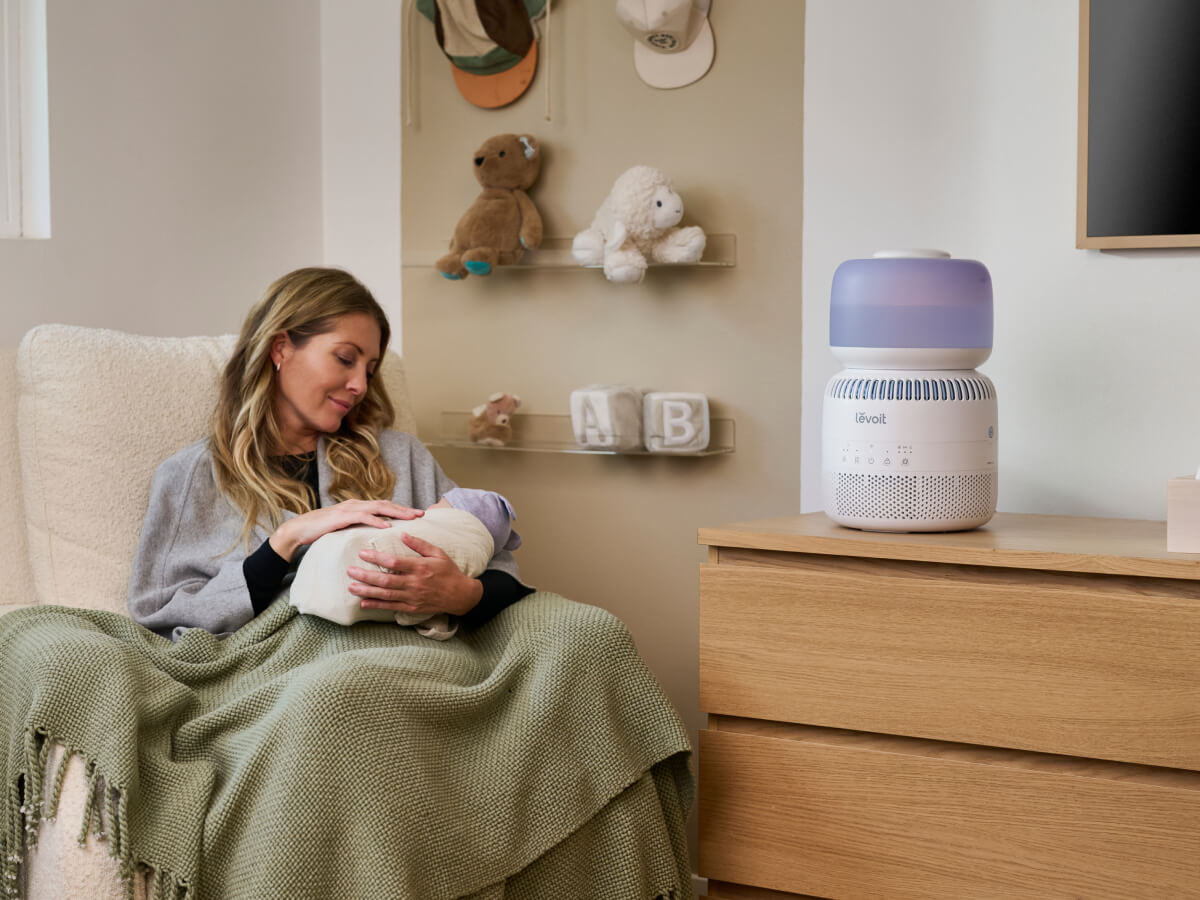
When deciding where to put a humidifier in a baby room, choose a stable, elevated surface like a dresser, where it can't be knocked over. Keep it away from the crib, bedding, walls, and moisture-sensitive items like wood furniture or books. Leave open space around it for airflow, and tuck the cord safely out of reach. Some models, like the Levoit Sprout, call for at least 30 cm (12 in) of clearance from walls.
Keep Humidity at a Comfortable Level
Health Canada recommends keeping indoor relative humidity between 30% and 50%. A hygrometer, or a humidifier with a built-in sensor, makes it easy to keep tabs on the room. Too much moisture can encourage mould and dust mites, so aim for the middle of that range.
Use Fresh Water and Clean the Humidifier Regularly
Empty the tank when the humidifier isn't in use, and refill it with fresh water each time. Stagnant water gives bacteria and other microorganisms a chance to grow. Clean and disinfect the reservoir on the schedule in your manual, which for many models means at least once a week.
Can a Humidifier Help With a Baby's Cough?
Many parents look into humidifiers for cough season when their little one seems uncomfortable. When dry air contributes to a dry or irritated nose and throat, adding moisture can make the air in the room feel more comfortable. A humidifier isn't a treatment or cure for a cough, though, so reach out to your doctor if your baby's symptoms are concerning or don't go away. One more tip: ultrasonic models filled with tap water can release white dust, a fine layer of minerals that settles on nearby surfaces. To avoid it, use distilled water in an ultrasonic humidifier, or choose an evaporative model that works with tap water.
Common Mistakes to Avoid When Using a Baby Humidifier
Even the most prepared parents miss a step now and then (sleep deprivation is real). Here are a few common slip-ups to watch for.
1. Placing the Humidifier Too Close to the Crib
A unit within arm's reach can be tipped over or tugged by its cord, and direct mist can leave bedding damp. Keep it on a stable surface, out of reach, and aimed away from your baby.
2. Letting the Room Become Too Humid
When it comes to humidity, more isn't always better. Check your hygrometer often, and if you spot condensation on windows or walls, turn the humidifier down to help prevent mould growth.
3. Forgetting to Clean the Humidifier
Running a humidifier with old or dirty water gives microbes and buildup a place to grow. Refresh the water daily and stick to a regular cleaning routine.
4. Adding Essential Oils Without Checking the Instructions
Only add essential oils if your humidifier is specifically designed for them, since oils can damage some tanks and parts. For a nursery, it's simplest to skip them unless your baby's doctor says otherwise.
Humidifier for a Nursery: What to Look For
A humidifier for nursery use is the one that fits your space and your routine. Here are three Levoit options suitable for common nursery needs.
| Nursery Need | Levoit Pick | Coverage and Runtime |
|---|---|---|
| Smaller nurseries | Levoit Sprout Evaporative Humidifier | Up to 219 ft², up to 36 hours in sleep mode |
| Larger nurseries or shared spaces | Levoit OasisMist® 1000S | Up to 600 ft², up to 100 hours |
| Easy overnight use | Levoit Dual 200S | Up to 25 hours in a 290 ft² space |
Smaller Nurseries: Levoit Sprout Evaporative Humidifier
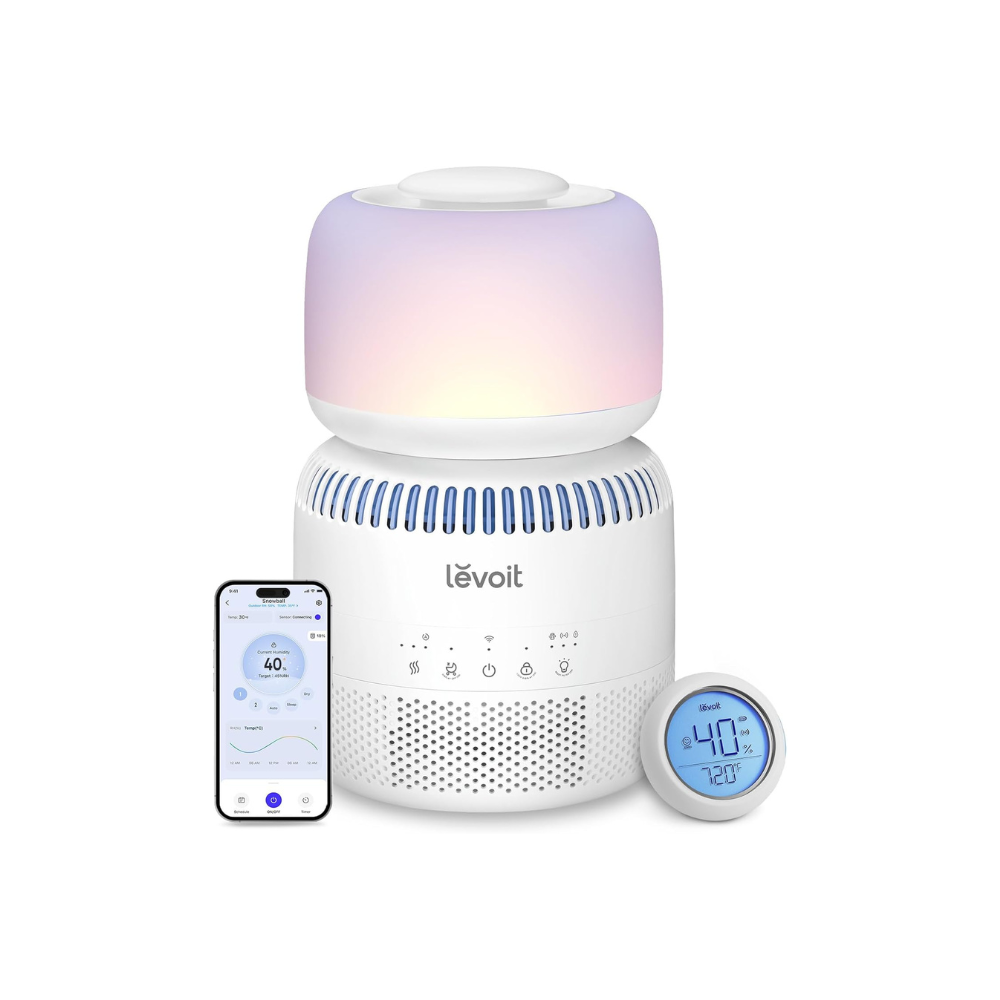
The Levoit Sprout was designed with little ones in mind. Its effective range of 219 ft² (20 m²) suits most smaller nurseries, and its evaporative technology adds mist-free moisture using tap water. A standalone sensor measures humidity right where you place it, and Auto Mode adjusts output to hold your target level.
At bedtime, Baby Sleep Mode lowers the fan and turns off the display, running at under 26 dB. A warm, blue-light-free night light, a child lock, and a Dry Mode that helps dry the wick filter after use round out the package.
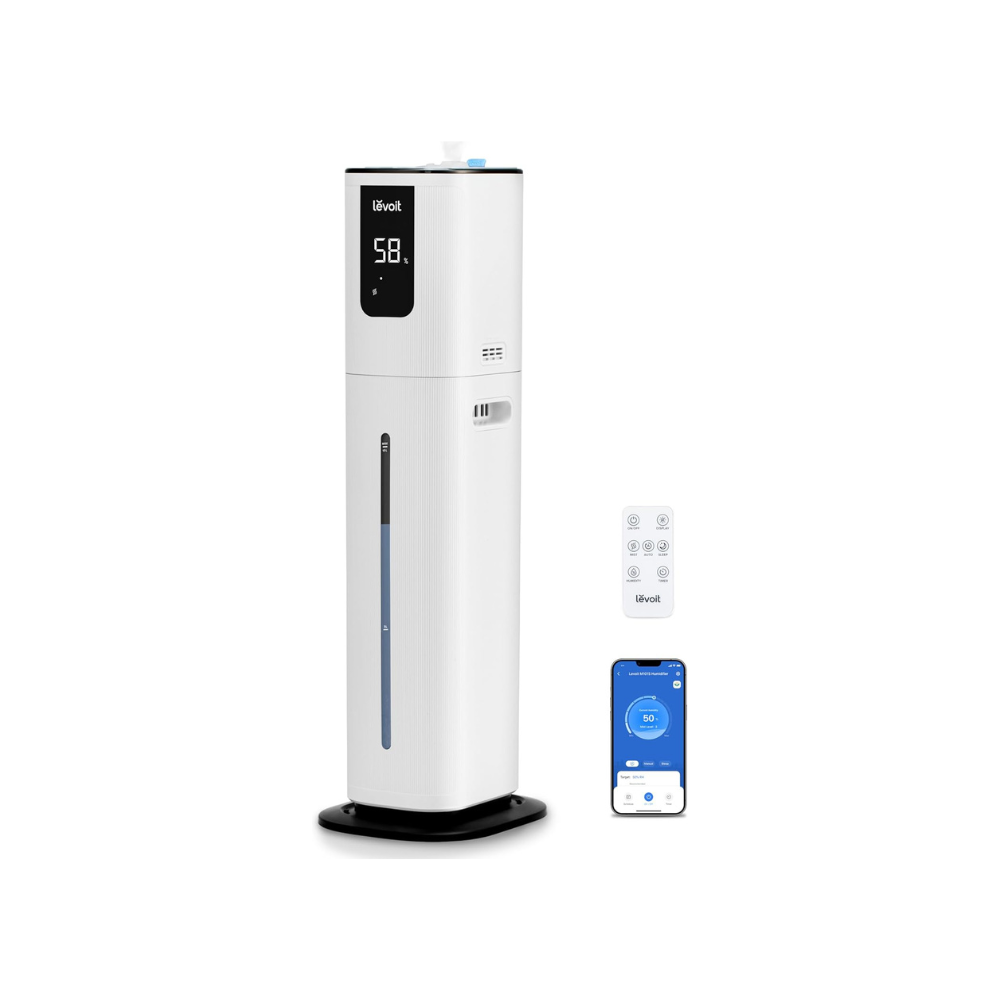
Larger Nursery or Multi-Room Use: Levoit OasisMist® 1000S
For a larger nursery or an open-concept play area, the Levoit OasisMist® 1000S humidifies up to 600 ft² with a mist volume of 350 mL/h. Its extended runtime of up to 100 hours means fewer refills during busy weeks.
With the VeSync app, you can set schedules and a custom humidity target, while Auto Mode and Sleep Mode keep things running smoothly day and night. The wide top-fill opening makes refilling and cleaning simpler, too.
Easy Overnight Use: Levoit Dual 200S
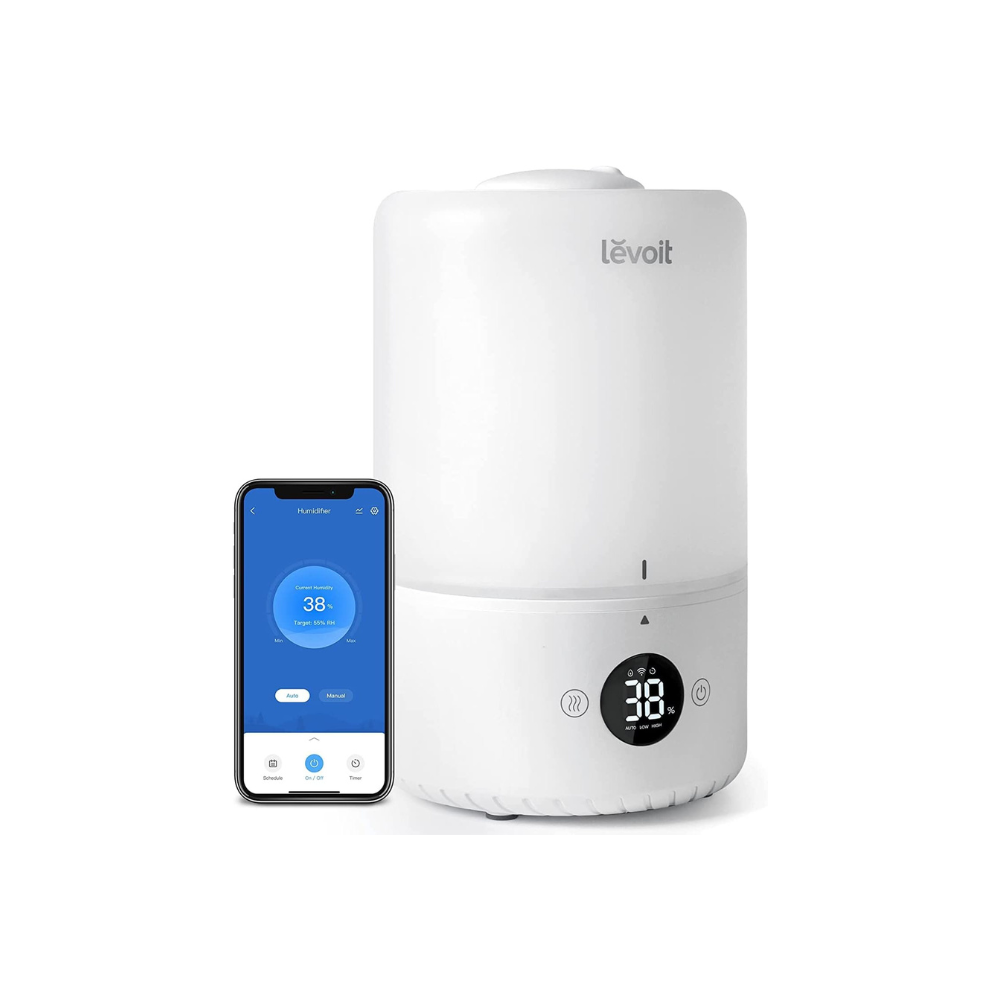
The Levoit Dual 200S keeps nights simple. Its 3-liter tank offers up to 25 hours of humidifying in a 290 ft² space, so one fill can last through the night and beyond. You can turn off the display lights, and the Noise Defender design helps it operate at near-silent levels.
Auto Mode maintains your target humidity, and app or voice control lets you make adjustments without tiptoeing into the room. Since it's an ultrasonic model, distilled water is a smart choice to help keep white dust at bay.
Quick Guide to Using a Humidifier for Infants
Short on time (and sleep)? Here's everything we've mentioned above in one easy checklist.
- Match the size: Choose a humidifier with coverage that fits your nursery's square footage.
- Watch the numbers: Keep relative humidity between 30% and 50%, per Health Canada's recommendation.
- Place it wisely: Set it on a stable, elevated surface a few feet from the crib and out of reach.
- Aim the mist: Point any mist away from your baby, bedding, and walls.
- Pick your water: Use distilled water in ultrasonic models, or choose an evaporative model for tap water.
- Keep it fresh: Empty standing water and refill with fresh water daily.
- Clean on schedule: Clean and disinfect the tank according to your manual, often once a week.
- Skip the extras: Leave out essential oils unless your humidifier is designed for them.
FAQs About Humidifiers for Infants
Is a Humidifier Necessary for a Newborn?
Not always. A humidifier can be useful when your home's air runs dry, especially during colder seasons. Check the room with a hygrometer first, and use one if humidity regularly dips below 30%.
How Long Can I Use a Humidifier?
That depends on your room's humidity. Many parents run a humidifier overnight or through dry months, then adjust or turn it off once the room stays in the 30% to 50% range. Auto Mode makes this easier by adjusting output for you.
How Close Should a Humidifier Be to a Crib?
Keep it a few feet away from the crib, out of reach, and with the mist pointed away from your baby. Always follow the placement guidance in your model's manual.
Where Should I Put a Humidifier in a Baby's Room?
Place it on a stable, elevated surface away from the crib, bedding, and walls. Make sure it has room for airflow and that the cord is safely tucked away.
Can a Humidifier Help With a Baby's Cough?
When dry air plays a role, added moisture can make the room feel more comfortable. A humidifier doesn't treat a cough, so talk to your doctor about symptoms that worry you or linger.
Here's to Softer Air and Sweeter Dreams
You already check the monitor, the swaddle, and the thermostat, so adding humidity to the list is a natural next step. With the right size, a comfortable humidity level, safe placement, and a regular cleaning routine, a humidifier for infants can help the nursery feel like the coziest room in the house.
Ready to find your fit? Explore Levoit humidifiers and bring a little more comfort to your baby's space.
The information provided here is for informational and educational purposes only and should not be used in medical emergencies or for diagnosing or treating any medical condition. It's crucial to consult a licensed medical professional for diagnosis and treatment. External links are for informational purposes and do not constitute endorsements. No warranty of any kind, either expressed or implied, is made as to the products and/or the accuracy, reliability, timeliness, or correctness of the information provided herein.